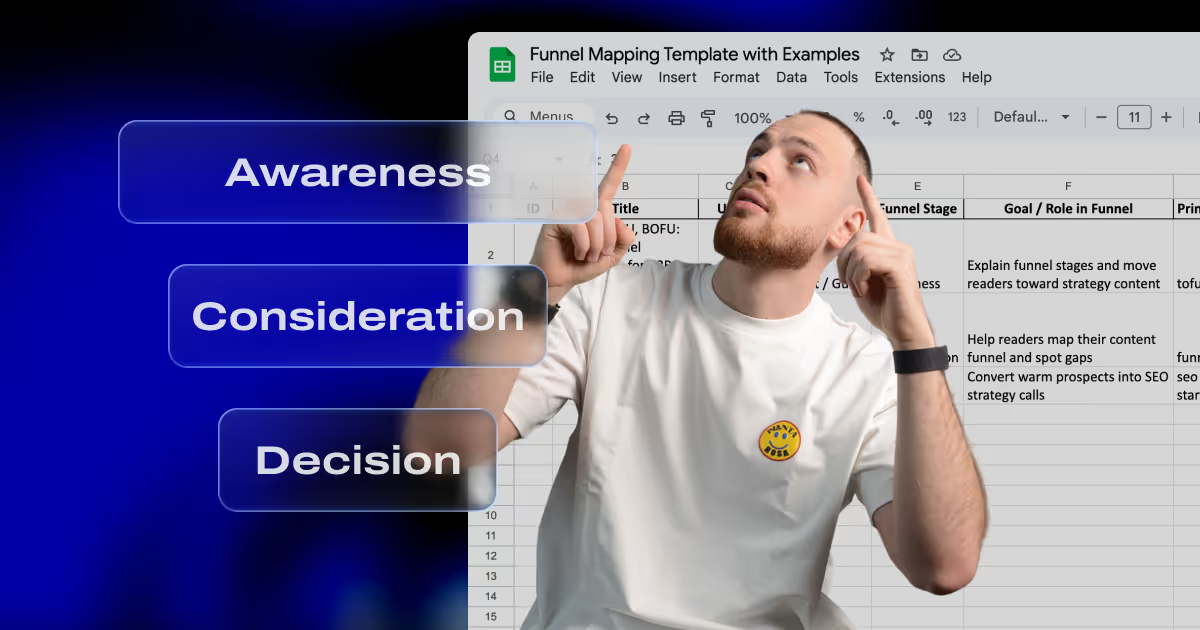


You’re creating content, but not sure if it’s doing its job and doing it well. That's what funnel mapping fixes.
What is Funnel Mapping?
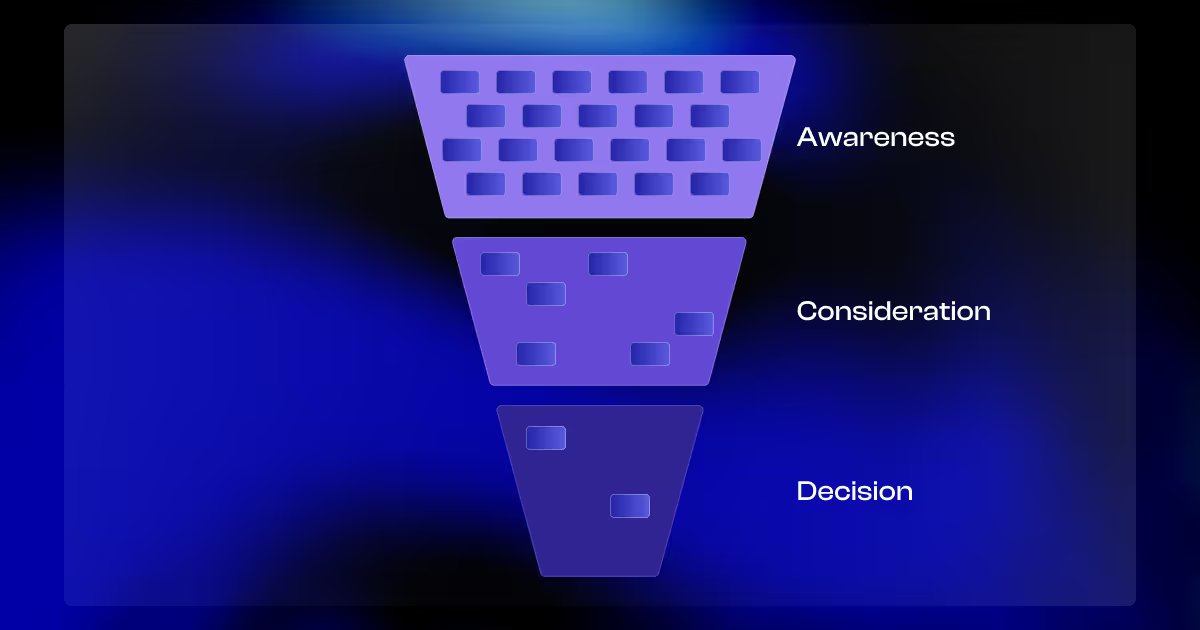
Funnel mapping is the process of organizing your content based on the funnel stage. It works by taking every piece of content you have and assigning it to one of the following stages:
- Awareness: Is the content piece made to help the visitor become aware of a problem he or she potentially has?
- Consideration: Is the content piece made to help the visitor find solutions to their problems?
- Decision: Is the content piece helping the visitor make a decision of what solution to go with to solve their problem?
In simple terms, content mapping helps visitors move from “I have a problem” to “Take my money.” It will help you see where you have gaps and what to create next. In example, after going over content mapping ourselves, we found that we lacked the middle of the funnel content pieces. That’s why we are creating this piece to help us offset our problem.
Here's why this matters: I imagine that if someone just discovered they have a problem doesn't want to be sold on something. Not yet at least. They want to figure out what the potential solutions exist and if they are simple, they may want to DIY. On the other hand, if visitors are ready to buy, they don’t care about how to guides.
Content mapping ensures you're giving people what they need based on where they are in their buyer journey.
Think of it as a spreadsheet that tells you exactly what content to create and where it fits in your funnel. In other words, it’s a simple marketing funnel map you can update as your content grows.
Why Funnel Mapping Matters
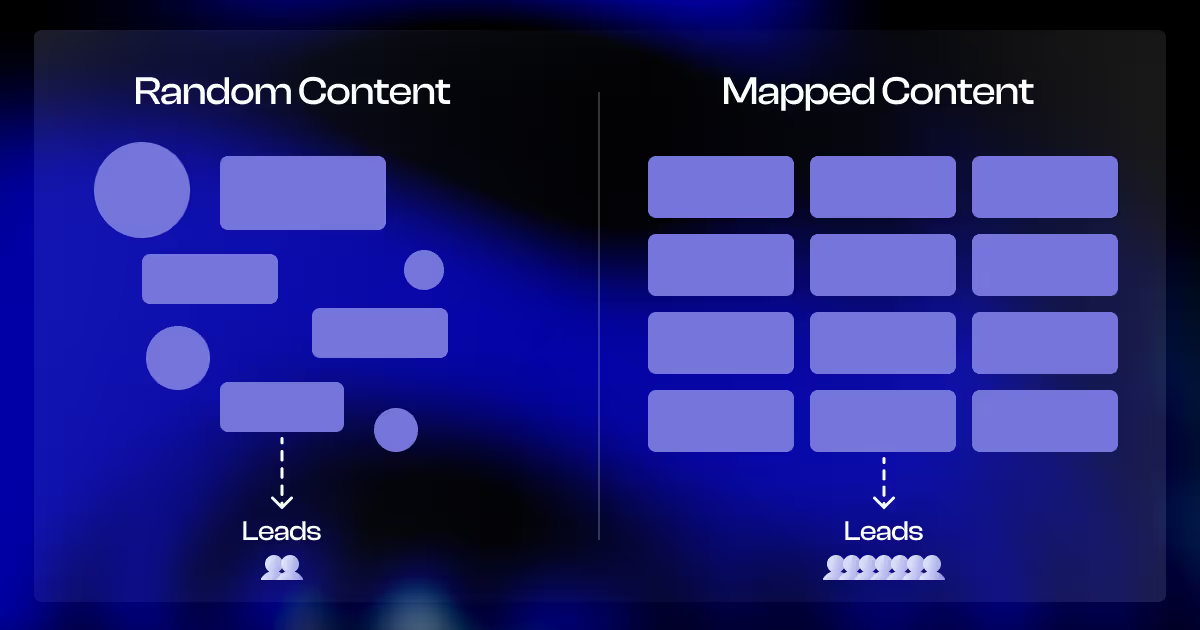
Without a plan, your actions are random. And creating random content doesn’t help you acquire leads. Instead, random actions turn into a cost. The team that writes blog posts because they heard “content is king,” or “content marketing brings us a ton of leads. You should try it.” is set up for failure.
Don’t believe me? We created a ton of content in 2025 that brings in roughly 1.9k visitors over a 28 day period.
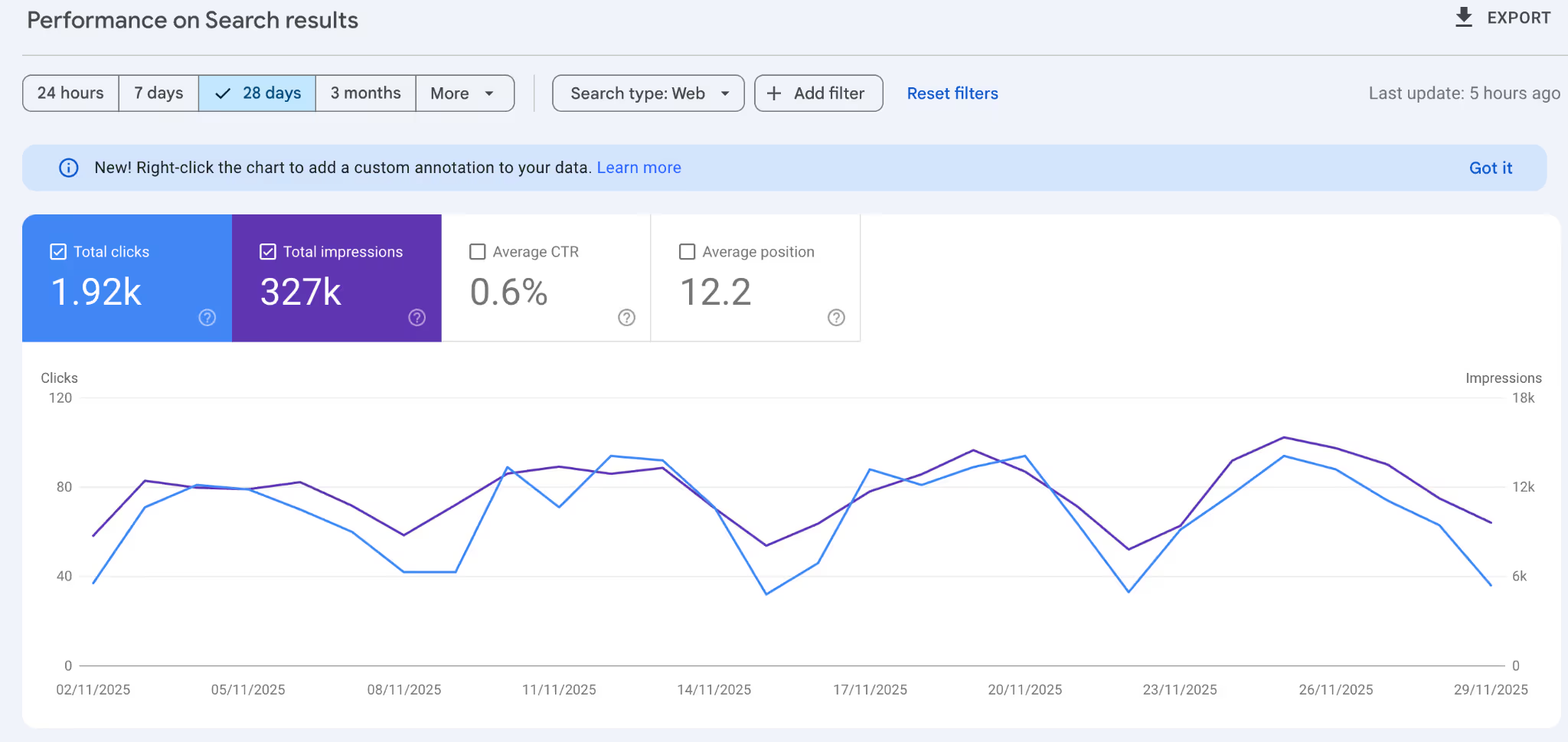
While this may be impressive to some brands, these visitors are mostly in the awareness stage. They are coming to get educated, not to find solutions to their problems, nor to buy anything.
In perspective, if we pin the results we got from content marketing activities against the content marketers in 2025, I can't help but feel like we've been underperforming on the leads front. See statistics.
See What's Missing
When you map your content to your funnel, gaps become obvious. You may have 30 blog posts attracting traffic, but nothing that converts that traffic into leads.
Want us to build the funnel with you? If you don’t just want "more traffic" but a path that turns readers into leads, join our sprint and get 20+ qualified leads in 30 days.
On the other side of the same coin, you may have great sales materials and no content that warms people up first.
The map shows you what you’re missing, helps identify where you’re wasting your time and where your time should be re-allocated.
Stop Creating Random Content
Every piece of content must serve a purpose. The purpose of Awareness content is to attract people and develop brand recognition. Consideration content helps you improve your topical authority and build trust. Clearly, you can capture some leads at this stage. Decision content helps your prospects decide whether or not to take action.
Content mapping forces you to define that purpose before you create anything. If you can't say which funnel stage a piece of content serves, stop what you’re doing and walk away.
Align Your Team
When everyone looks at the same content map, your team knows what resources to create. Your designer knows what resources to package. Your sales team knows what materials exist to send to your warm and cold prospects.
Who & When to Use Funnel Mapping
The Target Audience of Our Resource
Content mapping works for anyone creating content regularly: marketing managers, content leads, founders handling their own marketing, agencies managing client content, etc.
You may find this resource useful if you're producing content across multiple formats (blogs, videos, emails, downloads) and want to make sure it all works together instead of competing for attention.
It’s especially helpful if you're working on SEO and building keyword clusters. This kind of content mapping for SEO makes it easier to identify gaps, plan new pages, and get team alignment around your SEO strategy.
It’s especially helpful for SEO. Many SEO teams we’ve seen only track eyeballs you’re getting (impressions and clicks). That’s not good.
Content mapping helps us set better key performance indicators (KPIs) around our SEO strategy. We track things like qualified traffic, converted leads, and pages that push people toward converting (see what I did there). It’s a simple way to measure business outcomes over vanity metrics.
Use Cases
Map your content when you:
- Launch a new product and need content to support it
- Audit existing content and find most of it isn't converting
- Plan content for the next quarter or year
- Onboard a new content creator who needs to understand your strategy
- Notice traffic is up but conversions are flat
Content mapping is a must have item to be added to your toolbox when you have resources in multiple places (blog posts, YouTube videos, downloadable guides, email sequences).
Situational Tips
Small teams benefit most. When cash flow is slow, you can't really afford to waste time on content that doesn't move people through your funnel (and contribute to your bottom line). Knowing exactly what to create (and what not to create) keeps you efficient.
Clearly, the importance of content maps scale with your content needs. That said, as you grow, you can afford to create more content without short-term return on investment (ROI). Based on the same logic, it is important, but not a survival tool unlike for small businesses.
How to Create a Funnel Map from Scratch (Step-by-Step)
Define Your Funnel Stages
Start with the three basic stages most businesses use:
- Awareness (TOFU)
- Consideration (MOFU)
- Decision (BOFU)
We talked about these three in the “What is funnel Mapping section” of this guide. If you’re wondering how to map your content funnel in practice, the next steps walk you through it.
List Your Existing Content
Open a spreadsheet. List every piece of content you currently have:
- Blog posts
- Videos
- Downloadable guides or templates
- Email sequences
- Webinars
- Case studies
- Social media series
- Podcasts
Include the title, format, and URL. Don't organize anything yet, just get it all in one place.
Assign Each Piece to a Stage
Go through your list and ask: “What stage of the funnel does this serve?”
Awareness content answers basic questions and defines problems. If someone who's never heard of you would find it helpful, it's awareness.
Consideration content helps people evaluate solutions and understand different approaches. If it helps someone decide between options (without directly selling), it's consideration. And talking about consideration, consider downloading the template to help yourself map your content.
Decision content proves your solution works and makes buying easy. If it's designed to convert someone who's ready to buy, it's decision.
Add a column in your spreadsheet for the funnel stage and label each piece.
Identify Content Gaps
Once everything's mapped, patterns emerge. You likely fall into one of the following categories:
- Lots of awareness content but no lead magnets (little to no consideration content)
- Good sales materials but no traffic (missing awareness content)
- Consideration content but no clear path to decision (poor interlinking, or little BOFU content)
These gaps tell you exactly what to create next. If you have 25 blog posts but only 2 case studies, you need more decision-stage content.
PS. Individual case study pages are the highest ROI page type we have created for our website.
Plan What to Create Next
Create a separate tab in your spreadsheet for planned content. List what you need to fill the gaps you found.
For each planned piece, include:
- Working title or topic
- Funnel stage it serves
- Format (blog, video, download, etc.)
- Target audience (ICP)
- Key questions it answers
- Estimated completion date
This becomes your content funnel plan and content calendar, organized by strategy instead of random deadlines.
Mapping Content Types to Funnel Stages
Different types of content work better at different points in the buyer journey. Now that you already know the three funnel stages (awareness, consideration, decision), here’s how each stage translates into content formats:
Awareness Content (TOFU)
At this stage, people are still learning. They’re searching for answers, definitions, and explanations — not brands.
Content types that work:
- “What is” and “how to” blog posts
- Short explainer videos
- Infographics
- Social posts about common problems
- Beginner guides
- Simple checklists
Goal: Help them understand their problem. If you teach them something useful now, they’ll remember you later.
Consideration Content (MOFU)
Here, people already know the problem — now they’re comparing approaches and figuring out their options.
Content types that work:
- Comparison guides (approaches, not vendors)
- Webinars or workshops
- Ebooks and whitepapers
- Email courses
- Deep how-to guides
- Expert interviews
- ROI calculators
Goal: Build trust and authority. This is where you capture leads, because people at this stage will exchange their email for something genuinely valuable.
Decision Content (BOFU)
Now buyers are choosing who to go with. They don’t want theory — they want proof.
Content types that work:
- Case studies
- Customer testimonials
- Product demos or free trials
- Pricing pages
- "Us vs. Them" comparison pages
- Implementation guides
- FAQ pages that address objections
Goal: Remove doubt. Show results. Make the next step easy and obvious.
Content Examples by Business Type
What works depends on what you sell. Here are a few content funnel examples by business type:
B2B SaaS: Awareness (blog posts on industry problems), Consideration (product comparison guides, webinars), Decision (free trials, demos, case studies)
E-commerce: Awareness (social content showing problems your product solves), Consideration (buying guides, product comparisons), Decision (reviews, ratings, limited offers)
Professional Services: Awareness (industry trend reports, how-to guides), Consideration (case studies, consultation frameworks), Decision (free audits, client testimonials, pricing)
B2B Manufacturing: Awareness (technical explainers), Consideration (specification guides, ROI calculators), Decision (custom quotes, samples, facility tours)
Funnel Mapping Tools & Templates
You don't need fancy software to map content. A spreadsheet works fine.
Using a Spreadsheet
Create tabs for:
- Existing Content: List everything you currently have
- Planned Content: What you need to create
- Content Calendar: When you'll publish planned content
- Performance: Track metrics for each piece
For each piece of content, track:
- Title
- Format
- Funnel stage
- Target audience
- Primary keyword or topic
- URL
- Performance metrics (views, conversions, etc.)
This gives you a simple visual funnel map and a complete view of your content strategy in one place.
Project Management Tools
If you're coordinating a team, move your content map into your project management tool:
- Asana, Clickup or Monday: Create a project for each funnel stage with tasks for individual content pieces. Set up blockers (consideration content can’t be built before awareness content and so on)
- Trello: Build boards for each stage with cards for content pieces
- Notion: Create a database with filters for funnel stage, format, and status
The advantage here is assigning owners, setting deadlines, and tracking progress in the same place you plan content.
Content Management Systems
Some CMSs let you tag content by funnel stage. If you're using WordPress, add a custom taxonomy for funnel stages. In HubSpot, use topic clusters and subtopics.
This lets you filter your published content by stage and see gaps without exporting to a spreadsheet.
Choosing What Works
Start with a spreadsheet. It's flexible, everyone knows how to use it, and you can customize it however you want.
Upgrade to a project management tool when you're coordinating multiple people or publishing frequently enough that deadline tracking matters enough to send push notifications to the assigned parties.
Use your CMS for filtering if you have hundreds of content pieces and need to search by stage regularly.
Best Practices for Effective Funnel Mapping
Start With the Questions Leads Ask
Before you map anything, list the questions your prospects ask before they buy. Use sales calls, chats, emails. That’s where the real gold is.
Why it matters: If your content doesn’t answer real questions, it won’t move anyone forward.
Learn from our mistakes: When we mapped our own content, we realized we had plenty of “SEO optimized” articles that drove traffic, without answering the questions our ICP would ask us before booking a call. Fixing that instantly improved our conversions, or at least increased the number of leads moving to the next stage.
Make Each Piece Lead to the Next Step
A funnel only works if people know where to go next.
Why it matters: Many websites have content that goes nowhere. People read one post, then bounce. A simple “next step” link keeps them moving through your funnel. Don’t leave this to chance.
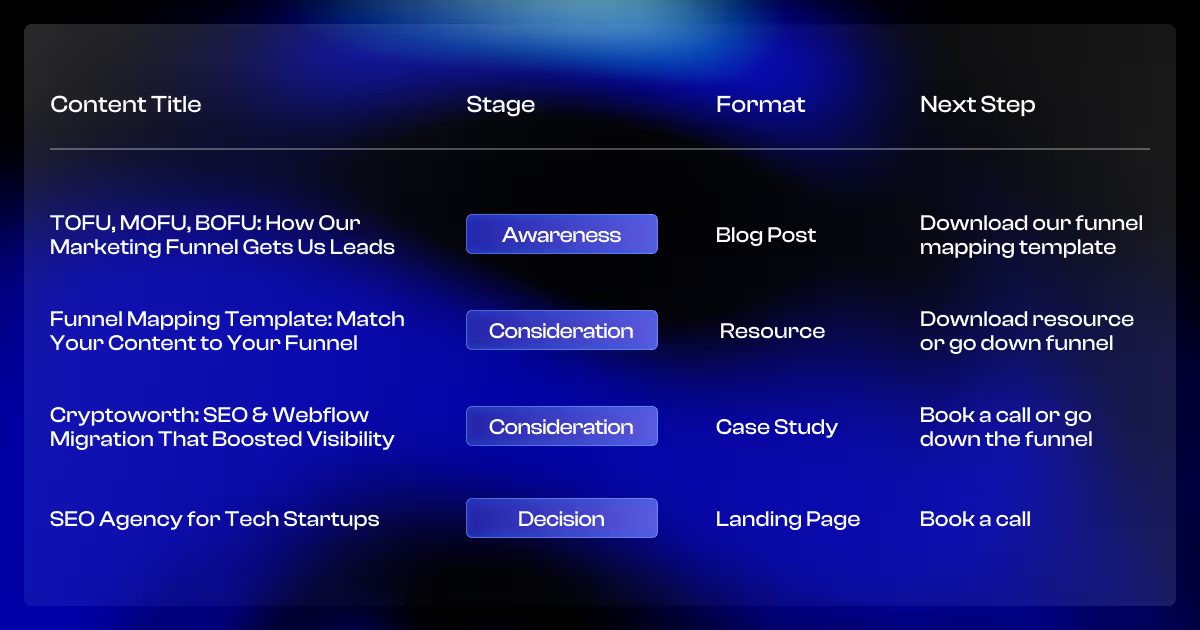
Example of such flow: Our TOFU MOFU BOFU awareness post points to this resource. This resource points to a case study. The case study should point to our SEO agency for tech startups service page.
If you want us to help you build this end-to-end path, our SEO lead generation services are designed to get you 20+ leads in 30 days.
Balance What You Create Based on Your Real Problem
You don’t need the same amount of content at every stage. You need content where your funnel is weakest.
Quick rule of thumb:
- No traffic? Make TOFU.
- Traffic but no leads? Make MOFU.
- Leads but no deals? Make BOFU.
Why it matters: Like us, other brands overproduce awareness content and ignore the rest of their site, which is why they get no revenue from their sites.
Review Your Map Regularly
Your content map isn’t a "one and done" thing. Update it often.
Why it matters: Your product changes. Your ICP changes. Your messaging changes. When your content lags behind, your funnel stops working. A monthly review keeps everything aligned.
Use the Map to Decide What Stays and What Goes
Once or twice a year, look at every piece of content and ask:
Does this content piece help someone move forward? Or is it just taking up space?
Why it matters: Good content moves people. Bad content wastes time. The map makes it obvious which is which.
Frequently Asked Questions
What is funnel mapping?
Funnel mapping is simply grouping your content by funnel stage - awareness, consideration, and decision. It helps you see what you already have, what’s missing, and what to create next.
Why should I map my content?
Because it stops you from creating content at random. Once everything is mapped, you’ll immediately see if you have traffic but no conversions, or strong sales assets but nothing that warms people up first.
How do I start funnel mapping?
Start with a spreadsheet. List every piece of content you have, then assign each one to a funnel stage. Look for the gaps, decide what to create next, or grab our content mapping spreadsheet to make it easier.
What should I track in my content map?
Keep it simple: title, format, funnel stage, URL, and date. If you want more insight, add performance metrics and a “next step” link to guide readers through your funnel.
How often should I update my content map?
Update it whenever you publish something new. Do a quick review every quarter to see what’s working, what’s outdated, and what needs to be added.
Can I use content mapping for social media?
Absolutely. Treat each post or series like any other content piece. Problem posts belong in awareness, comparison posts in consideration, and customer results in decision.
