


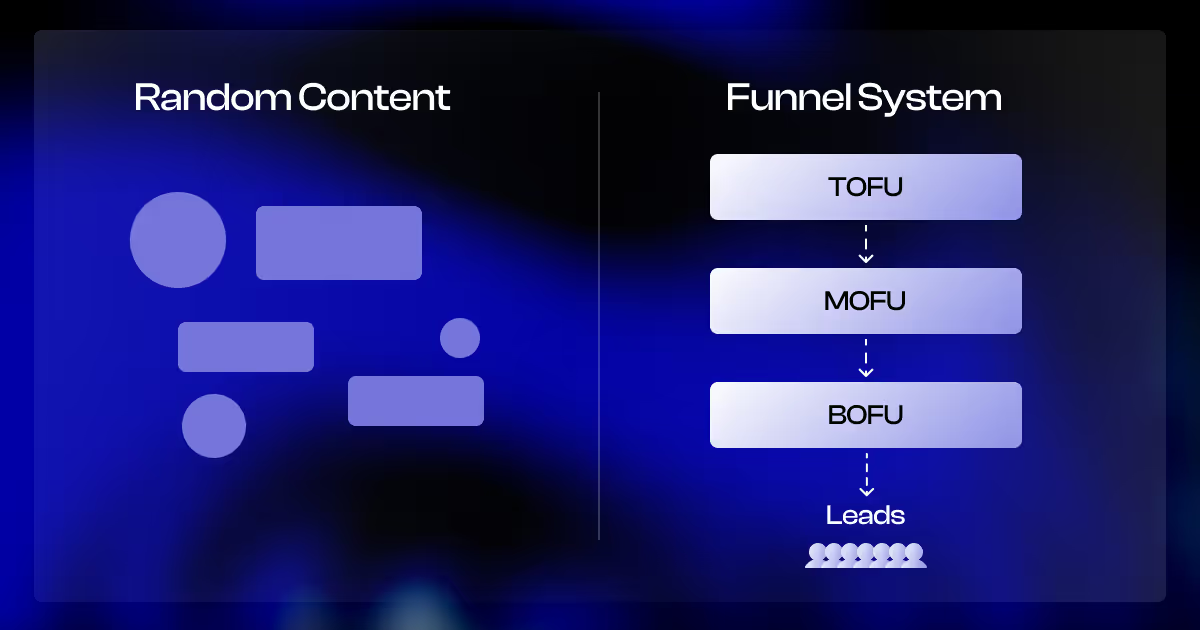
“You should release content” is a common marketing recommendation to get leads. It’s commonly done in a random manner. Businesses write blog posts, make videos, create downloadables, but none of them connect to their audience needs. If this sounds similar, you’re not alone.
Clearly someone who just learned they have a problem doesn't want a sales pitch. Someone ready to buy doesn't want a 101 guide. You need different content for different stages.
In this guide we aim to show you what content worked for us and our clients at each stage of the funnel and how you can move people from "who are you?" to "take my money."
What are TOFU, MOFU, BOFU?
Think of your marketing as a funnel. Lots of people go in the top, fewer come out the bottom as customers. That's normal.
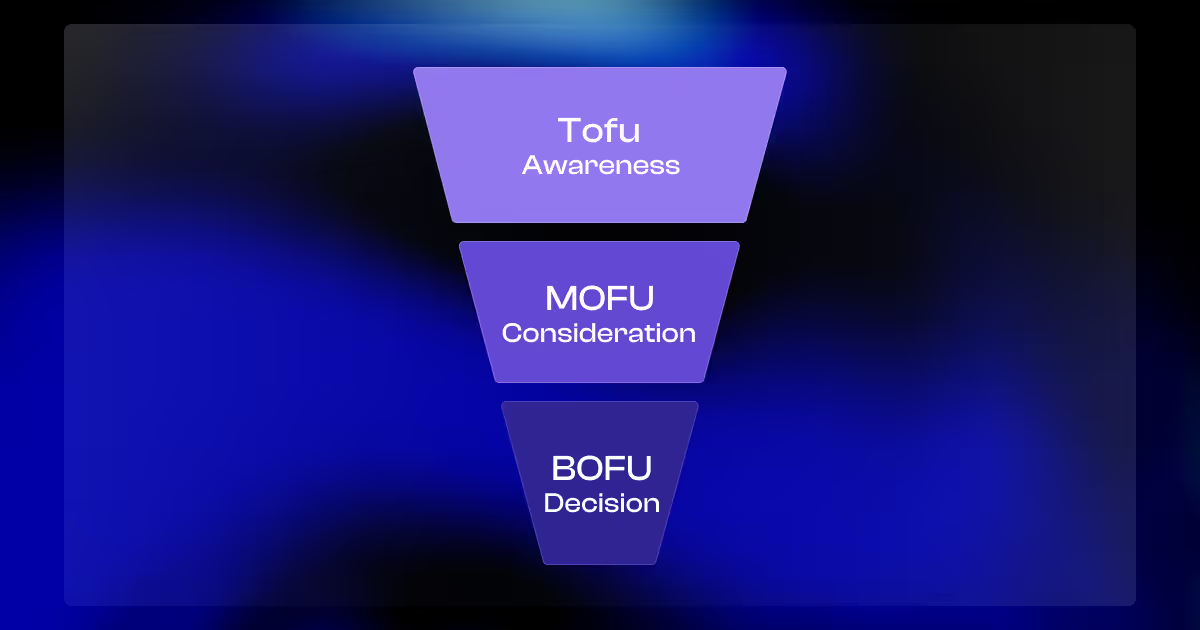
TOFU (Top of Funnel) is the awareness stage. Someone just realized they have a problem. They're googling basic questions and trying to understand what's happening.
MOFU (Middle of Funnel) is the consideration stage. They know what their problem is. Now they're researching solutions and comparing options.
BOFU (Bottom of Funnel) is the decision stage. They're ready to buy. They just need to pick which company to give their money to.
Why Most People Don't Make It Through
Most people who discover your brand won't buy from you. Some don't actually have the problem you solve. Others aren't ready to spend money on it. Some will choose a competitor.
That's fine. Your job isn't forcing everyone through. It's creating content that helps the right people take the next step while filtering out bad fits.
Here's what happens to the people who drop off from the most likely to the least likely scenario based on our experience:
- they simply weren't your customer to begin with and never come back.
- they might come back later when timing is better
- they might refer to someone who's a better fit
The goal isn't the maximum volume of people to land in your BOFU pages. The goal is to maximize the quality of those people, meaning they must be your ideal client profile. A smaller group of qualified buyers converts a lot better and stays longer (meaning your LTV increases) than a crowd of tire-kickers you pressured into purchasing.
Each Stage Has a Different Goal
At TOFU, you want people to know you exist and think you're helpful. At MOFU, you want them to consider your approach. At BOFU, you want them to choose you.
The mistake? Treating everyone the same. Trying to sell to someone who just wants information pisses them off. Explaining basics to someone ready to buy wastes their time.
Give people what they need based on where they are.
How This Works: A Real Example
Let's use this article as an example. You're an AI founder. You know you need to generate demand, but you're not sure how to structure your content strategy.
You search “tofu mofu bofu” because someone mentioned it in a podcast (TOFU). You land here, read through the article, and become aware you've been creating random content with no funnel strategy, and bookmark this page.
Because it helps you become aware of your problem, this is a TOFU piece of content. It's helping you understand a concept, not selling you anything yet.
A week or two later, you're ready to actually build your funnel strategy. You remember this article and come back. You notice we have a "Website Design Process" guide that shows how we structure client sites by funnel stage (MOFU). You read it. Now you're thinking “these people know what they're doing.”
You try creating a funnel for yourself for another two to three weeks, only to realize you spent too much time working on something that isn’t the highest ROI for your time. So you consider hiring someone to build out your funnels for you.
You remember us again. You check our case studies, see we've worked with other AI companies such as Synthflow AI, and book a consultation (BOFU). On the call, we show you exactly how we'd structure your funnel. You hire us.
That's how this funnel works. This article you're reading right now? It's our TOFU content. We're helping you first, building trust, so when you're ready to buy, you think of us.
Want us to build this funnel with you? If you want a connected path from TOFU → MOFU → BOFU instead of churning random content, we can help you get 20+ qualified leads in 30 days.

TOFU, MOFU, BOFU Content Mapping: What to Create at Each Stage
Here's how content types map to funnel goals. Use this as your planning reference:
This table shows you what to create, what questions to answer, and how long each stage typically lasts based on your business model.
Top of the Funnel (TOFU): Awareness Stage
Like yourself, people at TOFU stage are figuring out they have a problem. They might not even know what it's called yet. They're definitely not thinking about products or companies.
Who You're Talking To
Your TOFU audience is googling things like "why is this happening?" or "how do I fix this?" They want answers, not sales pitches.
Most have never heard of you. Some don't know there are professional solutions to their problem. They're learning, not shopping.
What You're Trying to Do
Get on their radar as someone who knows what they're talking about. Make them think "this company gets it" so they remember you later.
Don't sell here. You'll just scare them off. Give out a ton of value first. Sell later down the line.
TOFU Content Strategy by Industry
How you approach top-of-funnel content depends on what you sell:
B2B SaaS: Educational blog posts targeting problem-aware search queries. Example: "Why your team misses deadlines" for project management software. Timeline: 1-2 weeks in this stage.
B2C E-commerce: Social media content and short-form videos addressing immediate needs. Example: TikTok showing "5 signs you need new running shoes." Timeline: Minutes to hours in this stage.
Professional Services: Authority-building content like industry trend reports or how-to guides. Example: "Small business tax deductions you're missing" for accounting firms. Timeline: Days to weeks in this stage.
B2B Manufacturing: Technical content answering specification questions. Example: "How to choose the right industrial valve for your application." Timeline: 1-3 weeks in this stage.
What Content Works at TOFU
Educational content that's easy to understand works fairly well. You're attracting people who might eventually need what you offer, but right now they just need help.
TOFU content types:
- Blog posts answering common questions
- How-to guides for beginners
- Short explainer videos
- Checklists or templates
- Simple infographics
- Articles defining key terms
- Social media posts addressing pain points
Keep it friendly. Explain things like you're talking to a friend. Avoid jargon. And never pitch at this stage.
The Next Step
Every TOFU piece needs two things: real value and a gentle next move.
Give them something useful. If they learn something from your blog post, they'll trust you. If they feel tricked into reading a sales pitch, they'll leave.
The next step can be simple. "Want more? Here's a related article." "Download our free checklist." Just don't ask for too much too soon.
What to Measure at TOFU
At TOFU, track reach and engagement:
When these numbers trend positively, your awareness content is working.
Middle of the Funnel (MOFU): Consideration Stage
By MOFU, your readers should be aware of what their problem is. For example, if you’re clicking into our funnel mapping template, then you’re likely already aware of your content problem and are looking for ways to solve it.
Who You're Talking To
MOFU prospects are comparing options. Reading reviews. Trying to figure out which solution makes sense for them.
They might have found you through TOFU content, or they might have discovered you while researching solutions. Either way, they're not ready to buy. They need more info first.
What You're Trying to Do
Position your approach as the smart choice. You're building on the trust from TOFU by going deeper.
You can introduce your solution here, but you're still helping more than selling. Show them what makes a good solution and why certain things matter.
MOFU Content Strategy by Industry
B2B SaaS: Comparison guides showing different approaches (not specific vendors yet). Webinars demonstrating methodologies. Email courses teaching frameworks. Timeline: 2-8 weeks in evaluation.
B2C E-commerce: Product comparison content, buying guides, user-generated content showing products in use. Timeline: 2-7 days considering options.
Professional Services: Detailed case studies with process breakdowns, workshops or seminars, consultation frameworks. Timeline: 2-6 weeks in consideration.
B2B Manufacturing: Technical specifications comparisons, ROI calculators, implementation guides, vendor capability assessments. Timeline: 4-12 weeks in evaluation.
What Content Works at MOFU
MOFU content digs deeper. You're answering the specific questions people have when evaluating options.
MOFU content types:
- Comparison guides (different approaches, not vendors yet)
- Detailed how-to webinars
- Whitepapers or ebooks
- Expert Q&As
- FAQ pages addressing objections
- Email courses walking through a process
- Case studies showing methodology (not just results)
Be consultative. You're advising them, not pitching them. Talk about your solution if you want, but frame it as "here's what works" not "buy our product."
Capturing Leads at MOFU
This is where you get email addresses. People at MOFU will trade their contact info for valuable resources.
Someone who downloads your guide or joins your webinar is showing real interest. These are warm leads. Follow up with email sequences that share more MOFU content and gradually introduce soft offers before presenting your core offer.
Example: After someone uses our Website ROI Calculator (MOFU), we send educational emails for a bit over a week about maximizing the lead’s website’s ROI. Then we offer to take a look at the site and identify specific revenue opportunities they can implement in the next 30 days. This soft offer costs less than our full website build, makes them money quickly, and naturally leads to our core service when they're ready for a complete solution.
What to Measure at MOFU
Track engagement and leads:
These show whether people are seriously considering solutions and whether your content helps them.
Bottom of the Funnel (BOFU): Decision Stage
BOFU prospects are ready to buy. They know what they need. They've done their research. Now they're picking who gets their business.
Who You're Talking To
BOFU prospects have a shortlist of companies. They're looking for final proof that you're the right choice. They want to see results, understand pricing, and feel confident.
These people are ready. Remove doubts and make buying easy.
What You're Trying to Do
Convert them. Give them the specific info they need to say yes and a clear path to get started.
You're talking about your product directly now. But still, no aggressive tactics. Show value. Build confidence.
Some examples include our B2B Web Design Agency, or Webflow Development Agency pages. These pages are built specifically to help buyers compare, evaluate, and understand what working with us looks like.
BOFU Content Strategy by Industry
B2B SaaS: Free trials with onboarding support, product demos tailored to their use case, ROI calculators, implementation timelines. Timeline: 1-4 weeks from demo to close.
B2C E-commerce: Customer reviews and ratings, limited-time offers, free shipping, easy returns policy, abandoned cart emails. Timeline: Same session to 3 days.
Professional Services: Free consultations or audits, detailed proposals, client references, pricing transparency, service agreements. Timeline: 1-3 weeks from consultation to contract.
B2B Manufacturing: Custom quotes, technical specifications, samples or prototypes, facility tours, vendor certifications. Timeline: 2-8 weeks from quote to purchase order.
What Content Works at BOFU
BOFU content proves your solution works and makes the decision easy.
BOFU content types:
- Customer testimonials with specific results
- Product demos or free trials
- Your solution vs. competitors (honest comparison)
- Pricing pages and ROI calculators
- Free consultations or audits
- Implementation guides showing what happens after they buy
- Money-back guarantees or risk-reversal offers
Be reassuring. Address objections directly. Talk about pricing, implementation, and results. Use social proof.
Social Proof That Works at BOFU
At BOFU, testimonials do heavy lifting. Generic praise doesn't cut it. You need specifics.
Bad testimonial: "Great company to work with!"
Good testimonial:
"As soon as we implemented the new website, our traffic increased by 100%, and our conversions jumped by 120% in the first month."
— Brandon Redlinger, CMO @Avarra AI

Put testimonials on your pricing page, demo request forms, and anywhere someone might hesitate. Video testimonials work even better because they're harder to fake.
Clear Calls-to-Action at BOFU
Every BOFU piece needs a specific CTA. Don't make people guess.
"Request a Demo." "Start Your Free Trial." "Get a Quote." "Schedule a Call." Make these obvious and respond fast when someone clicks.
The easier you make it to buy, the more people will buy.
What to Measure at BOFU
Track conversions:
High conversions mean your funnel works. Low conversions mean something's broken between what people expect and what you're offering.
TOFU MOFU BOFU: Building Your Complete Funnel Strategy
Knowing the stages is one thing. Building a system that moves people through them is what matters.

The 5-Stage Funnel Implementation Framework
Here's how to build your funnel in order of priority:
Stage 1: Map Your Customer Journey
- List every question prospects ask before buying
- Group questions by awareness, consideration, decision
- Identify gaps where you have no content
Stage 2: Build BOFU First
- Create your demo or consultation process
- Write your pricing page
- Collect 3-5 customer testimonials with specific results
- Build comparison pages (you vs. alternatives)
Stage 3: Create MOFU Bridges
- Develop 2-3 detailed case studies
- Write comparison guides that lead to BOFU
- Set up email sequences for lead nurturing
- Create gated content worth trading an email for
Stage 4: Scale TOFU Traffic
- Write 10-20 blog posts targeting problem-aware keywords
- Optimize for search with proper keyword targeting
- Build internal linking from TOFU to MOFU content
- Promote on social channels where your audience exists
Stage 5: Optimize and Iterate
- Track drop-off points between stages
- A/B test CTAs and content formats
- Collect feedback from sales team on lead quality
- Refine based on what converts
Connect Everything in Your TOFU MOFU BOFU Funnel
Each piece of content should link to the next stage. Your blog post links to your ebook. Your ebook mentions a case study or demo. Your demo leads to purchase.
It's a guided path. Someone reads a TOFU article, likes it, and downloads a MOFU guide. They read the guide, see a case study, and request a BOFU demo. Each step feels natural.
Link Smart Throughout Your Funnel
TOFU content should point to MOFU resources. "Want to learn more? Download our guide." MOFU content should point to BOFU offers. "Ready to see it in action? Book a demo."
Never leave someone hanging. Always give them a next step.
Match your CTA intensity to the stage. TOFU gets a soft suggestion. MOFU gets a content offer. BOFU asks for the sale.
Want help building the path end-to-end? If you want us to help you turn “traffic” into a connected funnel, our SEO lead generation services are designed to help you get 20+ qualified leads in 30 days.
Stay Consistent
Your content changes at each stage, but your message shouldn't. The prospect should feel like they're on one journey with your brand.
If your TOFU content talks about a specific problem, your MOFU content should evaluate solutions to that problem, and your BOFU content should show why you're the answer.
Same voice. Same key points. Same brand throughout.
Let Content Qualify Leads
Not everyone should make it from TOFU to BOFU. Your content naturally filters people.
Someone who reads three articles, downloads a guide, and attends a webinar is serious. These are the marketing qualified leads worth your sales team's time. Track behavior and focus on high-engagement leads.
What to Fix When Your TOFU MOFU BOFU Funnel Breaks
Your funnel tells you where problems are. Here's how to diagnose and fix the most common breaks:
Problem: Lots of TOFU traffic but no MOFU engagement
Your content is attracting people, but they're not moving forward. Two likely causes:
First, weak CTAs. Go back to your top-performing blog posts and check what you're asking people to do. If it's "subscribe to our newsletter," that's not compelling enough. Change it to something specific: "Download our [specific resource] that shows you how to [solve their problem]." Test 2-3 different CTAs over a month and see which converts.
Second, you’re targeting the wrong audience. Check your search terms. If you're ranking for questions your ideal customer doesn't ask, you're wasting traffic. Look at the keywords driving your TOFU content and compare them to the language your actual customers use. You might need to rewrite or retire some content.
Problem: Strong MOFU engagement but no BOFU conversions
People are interested enough to download your stuff but won't take the final step. Usually one of three things:
Pricing confusion. If people don't know what your solution costs (even a range), they won't reach out. Add a pricing page or at minimum include "starting at $X" language somewhere visible. Uncertainty kills conversions faster than high prices.
Complicated sales process. Count how many clicks it takes to request a demo. If it's more than two (click button, fill form, submit), simplify it. Remove unnecessary form fields. If you're asking for company size, annual revenue, and number of employees before someone can talk to you, you're asking too much.
Trust gap. Your MOFU content might not include enough proof. Add 2-3 customer testimonials to your most-viewed MOFU pages. Include specific results with numbers. "Increased leads by 240%" works better than "helped us grow."
Problem: BOFU requests but low close rates
People want what you're selling, but your sales process is losing them. This is usually a sales execution issue, not a content issue.
Check your response time. If someone requests a demo and you don't respond for 24 hours, they've already talked to two competitors. Set up auto-responses confirming their request and promising contact within 2 hours.
Review your demo/consultation quality. Are you asking about their needs or just presenting features? Record your next five sales calls and listen for how much you're talking versus listening. If it's more than 60% you talking, that's the problem.
Check if your product matches your marketing. If your content promises results you can't actually deliver, people will figure it out during the sales process and churn. This requires an honest assessment of whether you're overpromising.
Quick Wins: Start Your TOFU MOFU BOFU Strategy Today
Don't have time to build an entire funnel? Start with these three pieces:
TOFU: Write 5 blog posts answering the most common questions your customers ask before they buy. Optimize them for search. These become your traffic engine.
MOFU: Create one detailed case study showing real results. Include the problem, what you did, and the specific outcome with numbers. This becomes your credibility piece.
BOFU: Make your demo or consultation request process dead simple. One form. Three fields max. Email, company name, phone. That's it. The easier it is, the more requests you'll get.
These three pieces alone will move more people through your funnel than having 50 random blog posts with no strategy.
Common Questions About TOFU, MOFU, BOFU
Why are there so many confusing marketing acronyms?
Marketing acronyms are mostly used for speed and convenience. In our context, the funnels repeat across industries and the labels give a quick insight into where someone is in the buyer journey.
How long should someone stay in each funnel stage?
It depends on what you sell. For a $50 product, someone might go from TOFU to BOFU in 20 minutes. For a $50,000 software contract, it might take 6 months.
Based on typical sales cycles: B2B SaaS sees TOFU (1-2 weeks), MOFU (2-8 weeks), BOFU (1-4 weeks). B2C e-commerce moves much faster: TOFU (same day), MOFU (2-7 days), BOFU (same session). Professional services typically run TOFU (days to weeks), MOFU (2-6 weeks), BOFU (1-3 weeks).
Track your average sales cycle and build content timing around that.
Should I create content for all three stages at once?
No. Start with BOFU, work backwards. Build your demo or consultation process first. Then create MOFU content that leads to it. Finally, add TOFU content to drive traffic.
Most people (including us at our starting point) do it backwards and end up with blog posts that go nowhere. BOFU first ensures every piece of content has a destination.
How do I know which stage someone is in?
Track their behavior. Someone who reads one blog post is TOFU. Someone who downloaded two resources and opened three emails is MOFU. Someone who visited your pricing page twice is BOFU.
Use your CRM or marketing automation to score leads based on actions. When they hit a threshold, move them to the next stage in your follow-up.